Don't Donate It Yet: 5 Ways to Turn Worn-Out Favorites Into Something New
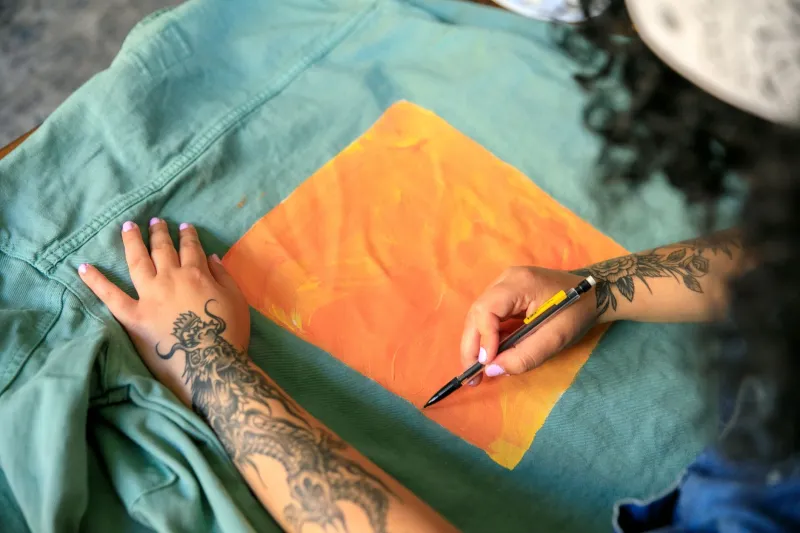
There's a specific kind of grief that hits when you realize a piece of clothing you love has officially worn out its welcome. The hem is fraying. The dye has faded to something unintentional. The fit has shifted in ways that no longer feel good. And yet—you can't bring yourself to bag it up for Goodwill.
That hesitation isn't sentimentality run amok. It's your instincts telling you that this piece still has a story left to tell. And in the world of handmade and upcycled fashion, that instinct is right.
Repurposing clothes you already own isn't just a sustainability move (though it absolutely is that too). It's a way of keeping your wardrobe's history alive while making room for something that actually serves your present life. Here are five approaches that work—whether you're handy with a needle or prefer to hand things off to someone who is.
1. Crop It, Restructure It, Make It Wearable Again
The most straightforward transformation is also one of the most powerful. A dress that no longer works as a dress might be a perfect top waiting to be freed from its lower half. Jeans that gap at the waist but fit great through the hips? A skilled maker can take them in, add a panel, or rework the waistband entirely.
This is especially worth doing with pieces made from quality fabric—think vintage denim, heavyweight cotton, or anything with a texture or weave you genuinely love. The material is still good. The original construction just isn't serving you anymore.
When you bring a piece to a maker for restructuring, bring a photo of something you'd actually wear now. The goal isn't to salvage the old version—it's to extract what's valuable and build something current around it.
2. Patch Work That Actually Looks Intentional
Here's something fast fashion never figured out: a well-placed patch doesn't look like a repair. It looks like a design decision.
If your favorite jeans have blown out at the knee (again), or your denim jacket has a worn spot on the elbow, hand-stitched or appliquéd patches can transform that damage into a feature. Sashiko-style boro stitching—a traditional Japanese mending technique that's had a serious moment in American DIY fashion circles—turns visible repairs into something genuinely beautiful. Geometric patterns, botanical shapes, abstract color blocking: the patch becomes the point.
This approach works especially well on denim, canvas, and thick cotton. And unlike iron-on patches that peel within a season, hand-stitched repairs actually strengthen the fabric around them. Your jeans don't just look better—they last longer.
If you're not comfortable doing this yourself, any maker who works in embroidery or textile art can help you design something that feels cohesive with the rest of the garment.
3. Cut a Quilt (or a Tote, or a Pillow) From Clothes You Can't Wear Anymore
Some pieces are too far gone to wear but too meaningful to throw away. The college sweatshirt that's basically tissue paper now. The kids' clothes you kept because you can't believe they were ever that small. The band tee from a show you'll never forget.
These are prime candidates for transformation into something functional and lasting. A memory quilt made from panels of significant clothing is one of the most genuinely personal objects a person can own—and one of the most frequently requested custom projects in the handmade fashion community.
But quilts aren't the only option. A sturdy tote bag cut from an old canvas jacket. A patchwork pillow cover assembled from worn flannel shirts. A small zipper pouch made from the back pocket of a pair of jeans. The fabric carries the memory; the new form makes it useful again.
Bring your pieces to a maker who specializes in upcycling and ask them what they see. You might be surprised by what's possible.
4. Overdye It Into Something Completely Different
Fading and discoloration are usually framed as problems. But they're actually opportunities—especially if you're willing to go darker.
Overdyeing is exactly what it sounds like: taking an existing garment and dyeing it a new color, either to cover uneven fading or to completely reinvent the piece's palette. A washed-out olive shirt can become a deep forest green. A faded pink dress can go charcoal or navy. And if you're feeling adventurous, tie-dye and shibori techniques can turn blotchy, uneven coloring into something that looks genuinely intentional.
Natural dyes—made from plants like indigo, turmeric, black walnut, and madder—are having a real moment in DIY fashion right now, and for good reason. They interact with fabric in unpredictable, beautiful ways. No two results are exactly alike, which means your overdyed piece becomes something truly one-of-a-kind.
This works best on natural fibers (cotton, linen, wool, silk). Synthetics don't take dye as readily, so check your garment's care label before committing.
5. Embroider a New Story Into an Old Piece
Embroidery might be the single most versatile tool in the upcycling kit. It can cover stains. It can reinforce worn areas. It can add color, texture, and personality to something plain. And it can turn a basic garment into something that looks like it came from a boutique—because, in a sense, it did. Yours.
The beauty of embroidery as a repurposing strategy is that it doesn't require the garment to be structurally compromised. A shirt that fits perfectly but has a small stain near the collar? A cluster of embroidered flowers right there, and the stain is gone—replaced by something that looks deliberately placed.
For pieces with deeper emotional significance—a parent's old flannel, a partner's worn-out henley—embroidering a date, a phrase, or a small symbol can transform the garment into something that functions almost like a keepsake you can actually wear. That's the Stained By Me ethos in its most literal form: the stain becomes the story.
Your Closet Is Already Full of Raw Material
The most sustainable wardrobe isn't one built entirely from scratch. It's one that keeps evolving—repaired, reworked, reimagined—rather than replaced. Every piece you transform instead of discard is a piece that doesn't end up in a landfill, a story that doesn't get lost, and a reminder that your clothes can grow and change right alongside you.
So before you haul that bag to the donation bin, take one more look. What's still good about it? What could it become? Sometimes the best custom piece you'll ever own is the one that started in your own closet.
