They Asked Me Questions No Clothing Brand Ever Had — And Then They Made Me Something Perfect
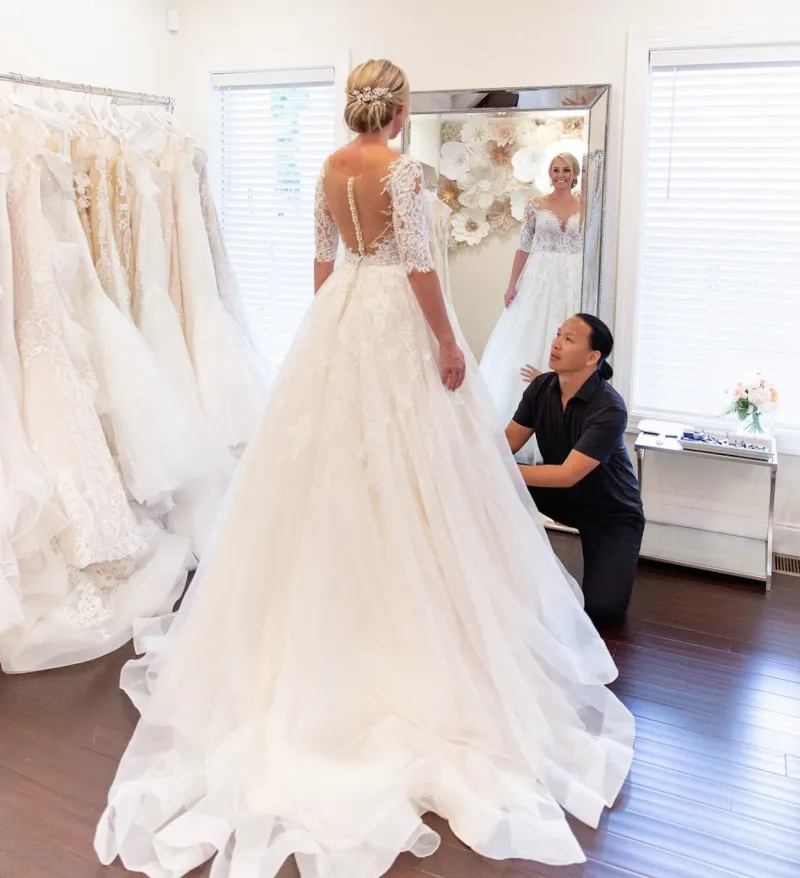
Photo: artisan seamstress fitting client custom dress consultation studio, via images.squarespace-cdn.com
The first question Tomás asked her wasn't about her size. It wasn't about her budget, her color preferences, or what was trending. He asked her where she felt most like herself.
Marcellina Torres, a 41-year-old teacher and mother of two in New Mexico, had commissioned a handmade dress for her sister's wedding. She'd expected a consultation that felt like filling out a form. What she got instead felt closer to a conversation she hadn't realized she needed to have.
"He asked me about a time I felt really beautiful. Not just pretty — beautiful. And I started talking about this trip I took to Oaxaca in my twenties, and the colors there, and how free I felt," she says. "By the time I left, I was crying a little. And the dress he made me... it looked like that memory."
This is what happens in the space between a maker and a client. Something unexpected. Something that no algorithm, no size chart, and no trend forecast can manufacture.
The Consultation That Changes Everything
Mass production starts with a product. Custom making starts with a person. That distinction sounds simple, but the downstream effects of it are profound.
When you commission a handmade garment, the first step isn't choosing from a menu of options — it's a conversation. Makers describe these initial consultations as part interview, part therapy session, part detective work. They're trying to understand not just what you want to wear, but why, and what you need the clothing to do for you.
Seattle-based maker and textile artist Noa Brennan has been creating custom pieces for clients for seven years. She says the consultations are the part of her work she finds most meaningful — and most complex.
"People come in thinking they know exactly what they want, and sometimes they do. But more often, what they say they want and what they actually need are two different things," she explains. "Someone will ask for something simple and black, and then they'll mention offhand that they've never felt comfortable in their body since having kids, and suddenly I understand what we're really making. We're making something that helps them feel like themselves again."
That kind of attunement is impossible to replicate at scale. A clothing brand with a million customers cannot ask each of them where they feel most like themselves. A maker with ten clients in a month can — and does.
Iteration as Intimacy
One of the least-talked-about parts of commissioning handmade clothing is the revision process. Unlike buying something off a rack, custom pieces go through rounds of fittings, adjustments, and check-ins. And somewhere in those iterations, something interesting tends to happen: the relationship deepens.
Clients describe coming back for a second or third fitting and finding themselves sharing things they hadn't planned to. About the event they're dressing for, sure — but also about what that event means to them. About the relationship they're navigating. About the version of themselves they're hoping to step into.
"There's something about being physically present, being measured, being seen in such a literal way," says Noa. "People open up. I know things about my clients that their friends probably don't know, just because of the nature of what we're doing together."
For Marcus Webb, a 37-year-old graphic designer in Chicago who commissioned a custom suit for his father's memorial service, those fittings became something he didn't expect.
"I told my maker — almost by accident — that my dad used to always say I 'cleaned up well.' Like it was this running joke between us. And she built that into the lining. She had it embroidered in there, just that phrase, in small letters," he says. "Nobody else knows it's there. But I know. And every time I put that suit on, I feel close to him."
That's not a product. That's a relationship, made tangible.
Being Truly Seen Is Rarer Than We Think
In a culture of personalization algorithms and targeted ads, it's easy to confuse being tracked with being known. A website that remembers your shoe size is not the same as a person who remembers that you mentioned your grandmother taught you to love the color green.
What clients consistently describe after commissioning handmade clothing is a feeling of genuine recognition — of being understood in a way that's surprisingly rare. And that experience has a real effect on how they relate to the finished piece.
Psychologically, this tracks. When we feel seen by another person, we form attachment. We assign meaning. The garment becomes more than fabric and thread; it becomes evidence that someone paid attention to who we are.
"I've had clients tell me they feel guilty getting rid of pieces I made them, even years later when the pieces don't fit anymore," says Tomás Reyes, the maker who created Marcellina's dress. "I think that's because the piece carries the memory of being understood. It's not just a dress. It's proof that someone really listened."
What Makers Carry, Too
This intimacy isn't one-directional. Makers describe carrying their clients with them through the making process in ways that shape the work itself.
Noa talks about thinking about her clients while she sews — not in a distracted way, but in a focused, almost meditative one. "When I'm working on a piece, I'm thinking about the person. I'm thinking about what they told me, what they need, what I want them to feel when they put this on. That intention goes into the work. I genuinely believe that."
This is part of what makes handmade clothing different in a way that's hard to fully quantify. The attention of a human being is woven into every seam. The garment is the result of someone actively caring about the outcome — not a machine running a pattern, but a person making choices, stitch by stitch, with a specific human being in mind.
A Different Kind of Getting Dressed
For most of us, getting dressed is a daily negotiation between what we own and what we need. We work with what's available, make compromises, and move on. It's practical. It's fine.
But there's another way. One where the clothes were made for you, by someone who took the time to understand you — your body, your history, your hopes for how you want to show up in the world. Where putting something on in the morning carries a little bit of someone else's care with it.
Marcellina still wears her Oaxaca-inspired dress. Not just for special occasions anymore — sometimes just because she wants to feel that way again. Like herself. Like she's wearing something that knows her.
"He never met me before that consultation," she says. "But somehow, he made something that feels like it's always been mine."
That's the unexpected gift of commissioning handmade. You go in looking for a garment. You come out with something that knows your story — because you told it to someone who was actually listening.