Something Old, Something Stitched: The Unexpected Materials People Are Weaving Into Custom Clothes
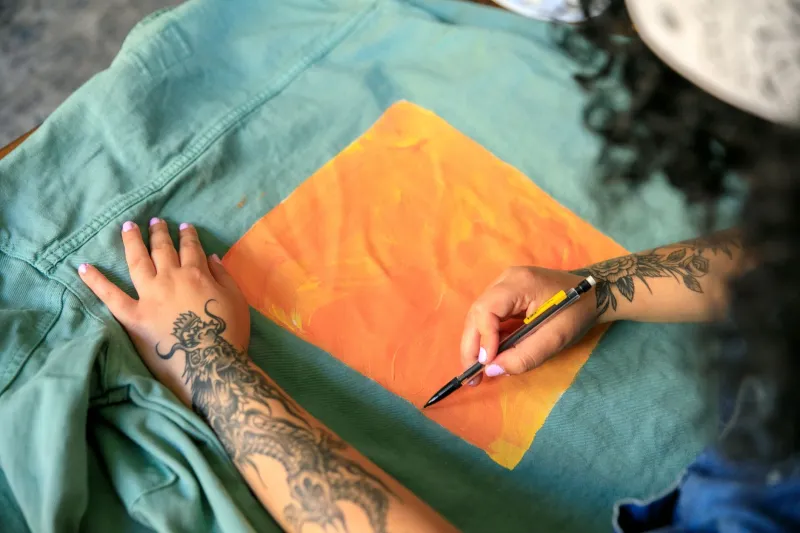
When Marisol from Austin brought her late mother's collection of embroidered tablecloths to a local maker, she wasn't sure what she wanted. She just knew she couldn't donate them, couldn't store them in a box forever, and couldn't bear the idea of them being useful to no one. What she left with, three months later, was a structured jacket — panels of hand-embroidered linen pieced together with her maker's own stitching, the original needlework preserved and visible, now worn instead of folded.
"I wear her hands every day," she said. "That's the only way I can describe it."
This is the quiet revolution happening at the intersection of handmade fashion and personal memory. Customers aren't just commissioning original pieces anymore — they're showing up with materials that matter, asking skilled makers to transform the already-loved into the still-wearable. The results are extraordinary. Here are five of the most meaningful and unexpected material sources people are bringing to the table — and what they reveal about where fashion is heading.
1. Deceased Loved Ones' Clothing
This is the one that stops people in their tracks when they first hear about it, and then immediately makes complete sense.
Grief is strange and material. We hold onto a parent's flannel shirt not because we need another flannel shirt but because it still smells like them, still holds the shape of their shoulders in some intangible way. But those shirts pile up. They live in boxes in closets, visited occasionally and then re-folded with guilt.
Increasingly, people are working with makers to transform these garments into something that can actually be part of daily life. A father's collection of work shirts pieced into a quilt-style vest. A grandmother's housedresses reconstructed into a skirt with the original buttons preserved along the waistband. A husband's old band tees cut and reassembled into a structured bag.
The transformation doesn't erase the original. It activates it. The fabric moves through the world again. It gets worn in new weather, in new cities, by someone who loved the person who wore it first. That's not just sentimental — it's a genuinely radical act of preservation.
2. Wedding Dress Remnants (and Sometimes the Whole Thing)
American weddings generate a staggering amount of fabric that then goes absolutely nowhere. The average wedding dress is worn once, preserved in acid-free tissue, and stored until someone decides what to do with it — which is often never.
Some brides are arriving at that decision early and creatively. Wedding dress fabric — often silk charmeuse, duchess satin, or intricate lace — is extraordinary material. Makers are incorporating it into anniversary pieces, postpartum clothing, and even children's christening outfits, creating a through-line of textile memory across a family's milestones.
One maker we spoke with described a client who brought in her mother's 1987 wedding gown — poufy sleeves, cathedral train and all — and asked for it to be reconstructed into a slip dress she could actually wear. "The lace from the sleeves became the hem detail," the maker explained. "The seed pearls from the bodice were hand-stitched into the neckline of the new piece. She cried when she tried it on. We both did."
3. Concert and Band Tees
The concert tee is one of the most emotionally loaded garments in American closet culture. It's a ticket stub you can wear — proof that you were there, in that room, on that night, when that song played. But they get worn out. They shrink. The graphic cracks. And yet throwing them away feels like throwing away the memory itself.
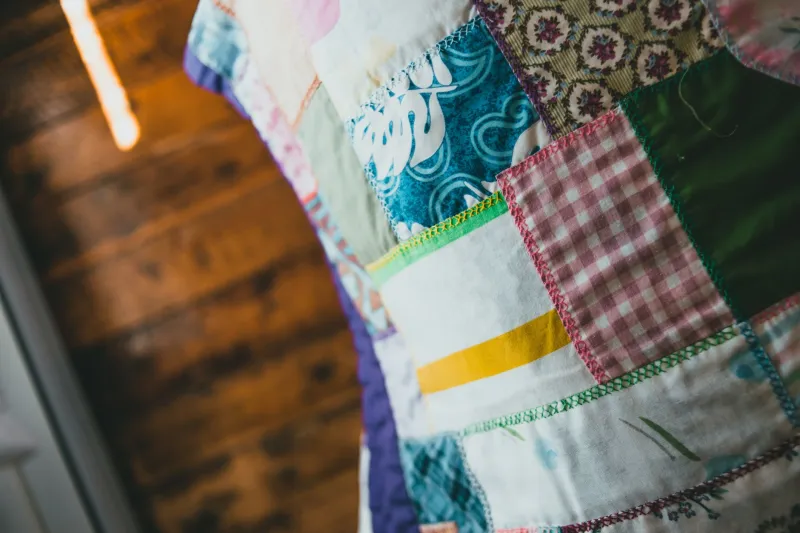
Custom makers are now doing extraordinary things with collections of vintage band tees. Patchwork jackets assembled from decades of shows. Tote bags that carry the faces of favorite artists. Quilted vests that map a person's entire musical history across their back.
What's interesting about this trend is that it skews across generations. Older millennials are bringing in their 90s alt-rock tees alongside Gen Z customers arriving with merch from artists who released their first album last year. The impulse is the same: this meant something, and I want it to keep meaning something.
4. Vintage Fabric Scraps and Thrift Store Finds
Not all meaningful material is personal in origin. A growing segment of custom clothing clients are showing up with curated collections of vintage fabric — remnants from estate sales, bolt ends from closing fabric stores, thrifted garments bought specifically for their textile quality rather than their wearable form.
This is partly an environmental impulse and partly an aesthetic one. Vintage fabrics — particularly pre-1980s textiles — were often made to standards that simply don't exist in current mass production. The weight of a mid-century wool crepe. The hand of a 1970s Liberty print cotton. These materials have a quality that's genuinely difficult to source new.
Makers working with these fabrics describe the process as collaborative archaeology. You're working with what exists, piecing together a garment from fragments that were never meant to be together, finding the coherence in the combination. The results tend to be genuinely one-of-a-kind in a way that even standard custom work can't always achieve.
5. Children's Outgrown Clothing
Parents have always struggled with what to do with children's clothes. They're outgrown almost as fast as they're purchased, often stained beyond donation viability, but loaded with memory — the onesie worn home from the hospital, the Halloween costume that took three weeks to find, the tiny sneakers that somehow still have grass stains from a specific afternoon in a specific park.
Custom makers are now helping parents transform these collections into adult-wearable keepsakes. A quilted jacket made from a child's first five years of clothing. A tote bag assembled from a teenager's outgrown sports uniforms. A patchwork throw — not clothing exactly, but textile memory in wearable form.
What these projects share is an understanding that clothing is never really just clothing. It's a container for time. And when someone arrives at a maker's studio with a bag full of fabric that means something, they're not asking for a garment. They're asking for a way to keep carrying what they've already been carrying — just more visibly, more beautifully, more deliberately.
That's what handmade fashion, at its best, actually does. It takes the material of your life and stitches it into something you can wear into whatever comes next.