The Long Wear: How a Single Handmade Piece Outlives a Whole Drawer Full of Fast Fashion

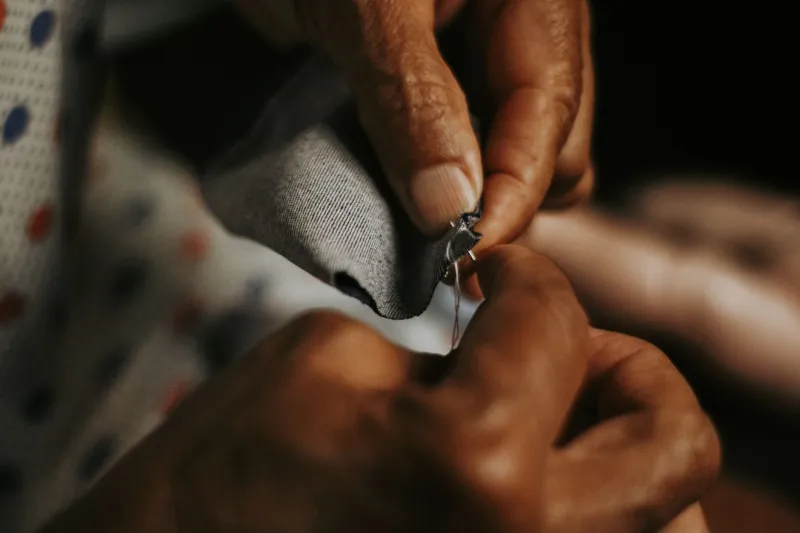
Photo by Photo by Alexey Elfimov on Unsplash on Unsplash
Let's start with a number: the average American throws away approximately 81 pounds of clothing per year.
That's not a typo. Eighty-one pounds. The Environmental Protection Agency estimates that the US generates more than 17 million tons of textile waste annually, and the vast majority of it comes from clothing that was never built to last. Garments designed for a season — or less. Shirts that pill after three washes. Jeans with seams that split by month four.
Now let's talk about Sarah.
A Coat Worth Knowing
Sarah Denton, a graphic designer based in Portland, Oregon, has been wearing the same handmade wool coat since she was 28. She's 42 now. The coat has been to New York, Austin, and back to the Pacific Northwest. It's been dry-cleaned maybe a dozen times and repaired twice — once for a hem that came loose after she caught it in a car door, and once to replace a toggle button that finally wore through.
'I've thought about replacing it,' she says. 'But every time I put it on, it just fits perfectly. It fits my actual body, not some standardized size. And honestly, it looks more interesting now than it did when I first got it. The wool has this kind of depth to it that it didn't have when it was new.'
That depth she's describing has a name in the world of quality textiles: patina. And it's one of the most important things that separates a handmade garment from a mass-produced one.
What Patina Is — And Why Fast Fashion Can't Fake It
Patina is what happens to high-quality materials and craftsmanship over time. It's the way a well-made leather belt develops a shine in the places it flexes most. It's the subtle softening of a dense wool weave after years of wear. It's the way a hand-dyed indigo jacket fades in the places where light and movement hit it most — creating a pattern that's unique to the life of the person wearing it.
Patina requires two things: quality materials and quality construction. Fast fashion has neither.
Mass-produced garments are typically made from low-grade synthetic fabrics or cheap cotton blends engineered to look good on a rack and in a photo, not to survive extended wear. The seams are sewn at speed with minimal reinforcement. The dyes are applied in bulk processes that fade unevenly and fast. These garments don't develop patina — they just deteriorate.
Handmade pieces, particularly those using natural fibers and traditional construction methods, are built differently at a fundamental level. The materials are chosen for their ability to wear well over time. The seams are reinforced at stress points. The finishing is done in ways that protect the garment's structure through repeated washing and wearing.
The result isn't just a garment that lasts longer. It's a garment that gets better.
The Construction Details That Actually Matter
For anyone who hasn't spent time around a sewing machine, the technical differences between handmade and mass-produced construction can feel abstract. Here's what it actually looks like in practice:
Seam finishing. In fast fashion, raw seam edges are often left with minimal finishing or covered with a quick serge stitch that frays over time. Handmade garments typically use French seams, flat-felled seams, or hand-bound seam allowances — techniques that encase raw edges completely and prevent fraying even through years of washing.
Stress point reinforcement. The places where garments fail first — pocket corners, crotch seams, underarm seams, button placements — are the places where a skilled maker puts extra attention. Bar tacks, hand-whipstitching, reinforced interfacing. These details are skipped in production-line manufacturing because they take time. In handmade work, they're standard.
Material quality. A maker building a single garment for a specific person can choose materials that are genuinely appropriate for that garment's purpose. Tightly woven natural fabrics for outerwear. Substantial lining materials that won't break down with body heat and movement. Hardware — zippers, buttons, snaps — sourced for durability rather than cost-cutting.
Fit. This one is underrated as a durability factor. Garments that fit correctly experience less mechanical stress than garments that are constantly being pulled, stretched, or constrained by a body they weren't designed for. A shirt that fits your actual shoulders doesn't stress its seams every time you move your arms. A waistband sized for your actual waist doesn't strain its stitching every time you sit down.
The Math That Actually Makes Sense
Marcus Reyes, a teacher in Chicago, has been buying handmade shirts for the past five years. Before that, he was buying fast fashion button-downs at roughly $25 to $35 a piece, replacing them every six to eight months when they frayed, pilled, or simply lost their shape.
'I was spending maybe $150 to $200 a year on shirts that I didn't even like that much,' he says. 'Now I have four handmade shirts that I've been wearing for years. They cost more upfront, but I haven't bought a shirt in two years. And I actually look forward to wearing these. I didn't look forward to wearing the cheap ones.'
This is the math that the fast fashion industry doesn't want you to run. A $200 handmade shirt worn for five years costs you $40 a year. A $30 fast fashion shirt replaced every six months costs you $60 a year — and generates twice the textile waste in the process.
The handmade piece wins on cost. It wins on quality. It wins on environmental impact. And it wins on the thing Marcus mentioned almost as an aside: he looks forward to wearing it.
Clothing That Grows With You
There's something worth sitting with in Sarah's description of her coat — that it looks more interesting now than it did when it was new. That's not nostalgia talking. That's what well-made clothing does. It accumulates life.
At Stained By Me, that accumulation is the whole point. The marks a garment picks up over years of real wearing aren't signs of failure. They're evidence of a life being lived inside something built to hold up to it. A crease that forms where you always fold your sleeve. A slight softening at the collar from years of contact with your skin. These are the marks of a relationship between a person and their clothing — one that can only happen when the clothing was built to last long enough for the relationship to develop.
Fast fashion doesn't give you that. It gives you a transaction. You buy, you wear briefly, you discard, you buy again. The cycle is designed to keep you spending, not to give you anything worth keeping.
One handmade piece, built right, can break that cycle entirely. Not because it's magic, but because it was made by someone who cared whether it lasted — for a person who had reasons to want it to.