More Options, More Problems: The Hidden Cost of Infinite Customization
Imagine sitting down to order a custom jacket. The brand's website gives you a dropdown for fabric weight, another for weave type, seventeen lining colors, six collar styles, three pocket placements, and a text box asking you to describe your "aesthetic vision in 200 words or less." You open the page excited. You close it forty minutes later having chosen nothing, feeling vaguely defeated.
This isn't a failure of imagination. It's decision fatigue—and it's one of the most undertalked problems in the world of personalized fashion.
Your Brain Has a Daily Budget, and Choices Spend It Fast
Back in the 1990s, psychologist Roy Baumeister coined the term "ego depletion" to describe how mental energy drains with every decision we make, big or small. The more choices you face, the harder each subsequent one becomes. By the time you've agonized over thread color, you might not have the cognitive bandwidth left to make a good call about silhouette—the choice that actually matters most to how the garment will feel on your body.
Barry Schwartz laid this out beautifully in The Paradox of Choice, and while he was mostly talking about cereal aisles and cable packages, the principle applies with striking force to custom clothing. When everything is on the table, nothing feels like an obvious answer. And when nothing feels obvious, anxiety fills the gap.
For people who are already stressed about their bodies, their budgets, or their sense of style, that anxiety can make what should be an empowering experience feel like a pop quiz they didn't study for.
The Illusion of Control
Here's the sneaky part: we think more options mean more control. We assume that if we can tweak every detail, we'll end up with something that perfectly reflects who we are. But research consistently shows that when people have fewer, well-curated options, they tend to be more satisfied with their final choice—not less.
A 2000 study by Iyengar and Lepper (the famous jam study, if you've heard of it) found that shoppers were far more likely to actually buy jam when presented with six varieties than when presented with twenty-four. The same logic holds for custom fashion. When a maker narrows the decision field with intention—presenting three fabric options that genuinely work for the garment rather than thirty—clients make faster, more confident choices and feel better about the outcome.
That's not limiting your customer. That's respecting their time and their mental energy.
What Thoughtful Constraints Actually Do
At Stained By Me, we talk a lot about clothing that carries a story. But stories don't come from a dropdown menu. They come from a conversation—one where the maker asks the right questions and listens carefully to what's said between the lines.
A skilled maker who limits your choices isn't being lazy or controlling. They're doing curatorial work. They're saying: I've thought about what actually works here, and I'm guiding you toward the version of this that will fit your life. That's not a constraint. That's expertise.
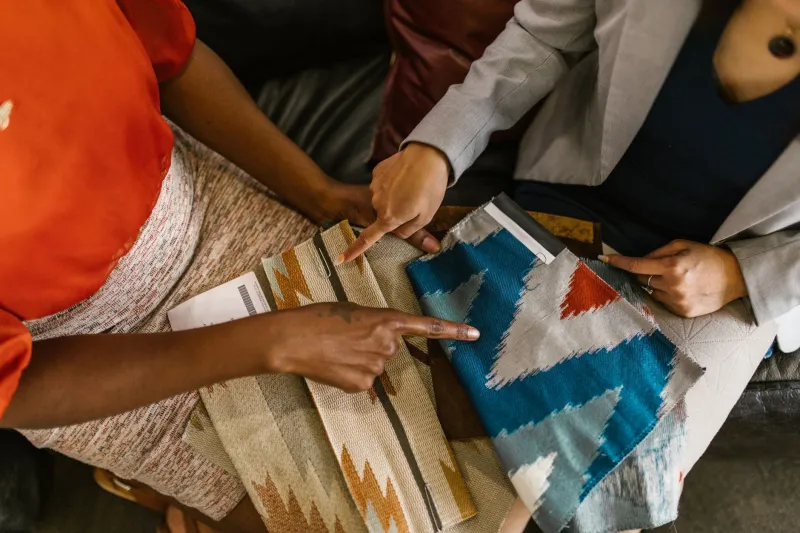
Think about how a good tailor operates. They don't hand you a binder of 500 fabric swatches. They ask where you'll wear the piece, what you already own, how you feel in certain fits—and then they pull three or four options that make sense. The decision feels manageable because someone with knowledge has already done the filtering.
That guided collaboration is where the magic actually lives.
The Emotional Weight of Getting It Wrong
There's another layer here that doesn't get talked about enough: the fear of regret. When you have fifty options, the possibility of choosing "wrong" feels very real. What if you'd picked the other color? What if the other pocket style would have been better? The more options exist, the more phantom versions of your garment haunt the one you actually ordered.
When a maker narrows the field and helps you arrive at a decision together, that regret anxiety shrinks dramatically. You're not choosing from a void—you're choosing from a curated set of genuinely good answers. The responsibility is shared. And when the piece arrives and you love it, you can trust that love instead of second-guessing it.
How to Work With a Maker Without Getting Overwhelmed
If you're new to custom clothing and worried about the decision process, here are a few things that actually help:
Start with feeling, not features. Before you think about fabric or color, ask yourself: how do I want to feel when I wear this? Confident? Soft? Bold? Giving your maker an emotional target is more useful than a list of specifications.
Bring one reference, not twenty. A single image that captures something you love—a vibe, a silhouette, a color relationship—is worth more than a mood board of contradictions. Let your maker ask follow-up questions.
Say what you hate. Sometimes the fastest way to narrow options is to talk about what you don't want. Scratchy fabrics, boxy cuts, anything that makes you feel like you're wearing a costume—put it on the table.
Trust the process, not the checklist. A good maker isn't just filling out your order form. They're reading you, asking questions, noticing what lights up in your answers. Let that happen. The back-and-forth is where the piece starts taking shape.
The Paradox Resolved
True personalization isn't about giving someone every option. It's about giving them the right options—and the right conversation to navigate them. The handmade fashion world is at its best when it functions less like a build-your-own interface and more like a collaboration between someone who knows their craft and someone who knows their life.
When those two people talk honestly, the result isn't just a piece of clothing. It's something that fits in a way that goes beyond measurements. And that kind of fit? You can't get it from a dropdown menu.