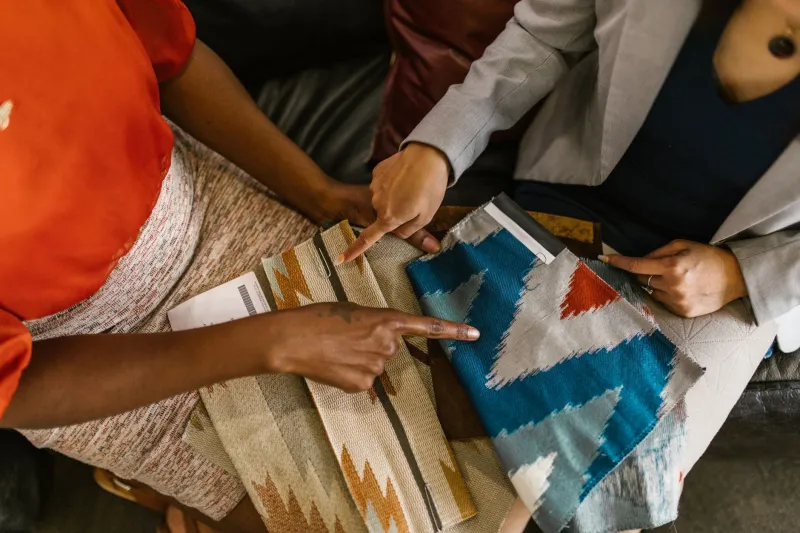
The Person on the Other End: What It's Really Like to Talk to Your Maker
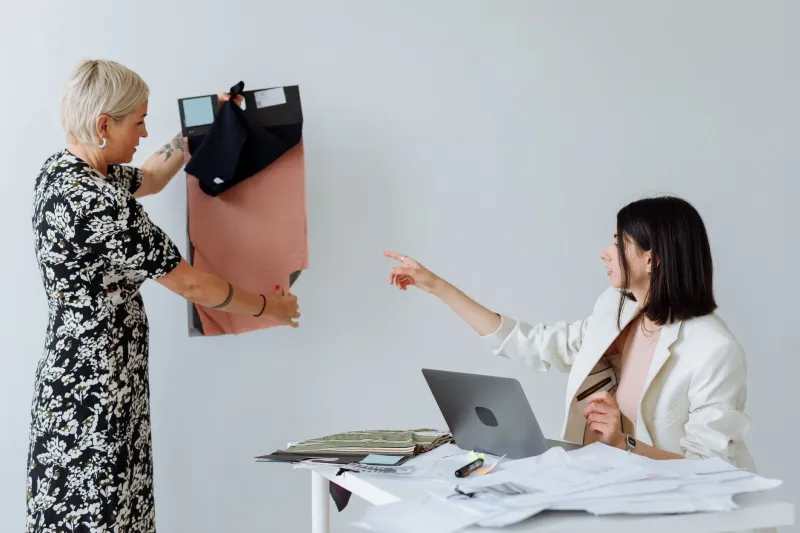
The first time Renata ordered a custom piece, she wasn't sure what to say.
She'd found the maker—a textile artist in Portland—through Instagram, fallen in love with her work, and sent a DM that said something like: "Hi, I love your stuff. Do you take commissions?" What she expected was a price list and a form. What she got was a question: *"What are you hoping to feel when you wear it?"
"I literally sat there for like ten minutes," Renata told me. "Nobody had ever asked me that about clothes before. I didn't know how to answer it. And then I started typing and I couldn't stop."
What followed was a two-week exchange that covered her complicated relationship with her body after having kids, the colors she'd loved in her twenties that she'd somehow stopped wearing, a specific kind of softness she'd been chasing in fabric for years without knowing how to name it. By the time the piece arrived—a loose, draping linen top in a dusty terracotta she'd described as "the color of the walls in my grandmother's house"—Renata said it felt less like receiving a package and more like being seen.
That's not a shopping experience. That's something else entirely.
What the Conversation Actually Looks Like
For anyone who hasn't commissioned custom clothing before, the intake process can feel a little vulnerable. You're not just picking a size from a dropdown. You're explaining yourself—your body, your life, your preferences, your past experiences with clothing that didn't work.
Makers who do this well have developed a kind of practiced listening that goes beyond technical specs. They're not just hearing "I want a structured blazer." They're tracking why you want it, where you'll wear it, who you're thinking of when you imagine putting it on.
Marcus, a custom menswear maker based in Atlanta, describes his intake conversations as "the most important part of the whole job."
"By the time someone's willing to pay for something handmade, they've already thought about it a lot," he says. "My job in that first conversation is to get them to say the thing they've been thinking but haven't said out loud yet. That's always where the real garment is hiding."
He gives an example: a client who came to him asking for "a nice suit for work." Standard request. But through conversation, Marcus learned the client was preparing for a job interview at a company he'd been trying to get into for three years. He was nervous about looking credible in an industry where he felt like an outsider. He wanted to feel like he belonged—not like he was trying to belong.
"That's a completely different brief than 'nice suit for work,'" Marcus says. "And it changes everything. The cut, the fabric weight, the color. You're making confidence, not just a suit."
The Vulnerability That Makes It Work
There's a reason this kind of conversation doesn't happen at the mall. It requires both parties to show up differently than they're used to.
For the client, it means being willing to say things that feel a little embarrassing or overly personal. I've never felt comfortable in my arms. I want to look like I have my life together even when I don't. I need this piece to help me feel like myself again after a really hard year.
For the maker, it means holding that information carefully—not just as data to inform a design decision, but as a kind of trust that shouldn't be treated casually.
Jade, who makes custom wedding and ceremony pieces in Chicago, says the conversations she has with clients are some of the most intimate she has with anyone.
"People tell me things in those sessions that I don't think they've told their partners," she says. "About how they feel in their body. About what they've always wanted to wear but never let themselves. About who they want to be on that day." She pauses. "It's a lot of responsibility. But it's also why I do this work. I'm not just making a dress. I'm making a container for one of the most important days of someone's life."
When the Conversation Changes the Design
Some of the most interesting custom pieces come out of moments when the client says something unexpected—and the maker is paying close enough attention to catch it.
Renata's maker, for instance, noticed that she'd mentioned her grandmother's house three times across two conversations. Not in the context of the top she was ordering—just in passing, while describing her general aesthetic. The maker filed it away. When it came time to choose the exact shade of terracotta, she sent Renata two options and said: "I keep thinking about what you said about your grandmother's walls. Does either of these feel closer to that memory?"
Renata chose the darker one. She cried when the package arrived.
"I hadn't even told her that was the important thing," she said. "She just heard it."
That's what distinguishes a genuinely skilled maker from someone who's technically proficient: the ability to listen past the explicit request and catch the thing underneath it. It's a skill that takes time to develop and can't be automated—which is exactly why it produces results that nothing else can replicate.
How to Make the Most of That First Conversation
If you're new to commissioning custom work and you're not sure how to show up for that initial conversation, here's what actually helps:
Don't over-prepare. You don't need a perfect brief. A good maker will ask the questions that surface what they need to know. Your job is to answer honestly, not comprehensively.
Tell the story behind the request. Where are you wearing this? What's happening in your life right now? Why this piece, why now? Context is everything in custom work.
Say the uncomfortable thing. The part of your body you're not sure about. The way clothes have let you down before. The thing you've always wanted to wear but talked yourself out of. That's usually where the best design lives.
Ask questions back. This is a collaboration. Ask your maker what they're thinking, what they're noticing, what they'd do if the choice were entirely theirs. Their instincts are part of what you're paying for.
The Piece That Knows You
There's a particular quality to clothing that was made through genuine conversation—a quality that's hard to articulate but immediately recognizable when you put it on. It fits in a way that goes beyond measurements. It reflects something true about who you are, or who you're trying to become.
That quality doesn't come from the fabric or the stitching, though those matter. It comes from the conversation that happened before the first thread was cut. It comes from someone asking the right question—and someone else being brave enough to answer it honestly.
At Stained By Me, we believe clothing can carry a story. But the story has to start somewhere. And more often than not, it starts with two people talking—one who knows how to make things, and one who knows how they want to feel—and both of them actually listening.