What Nobody Sees: The Quiet Rise of Secret Stitching in American Closets
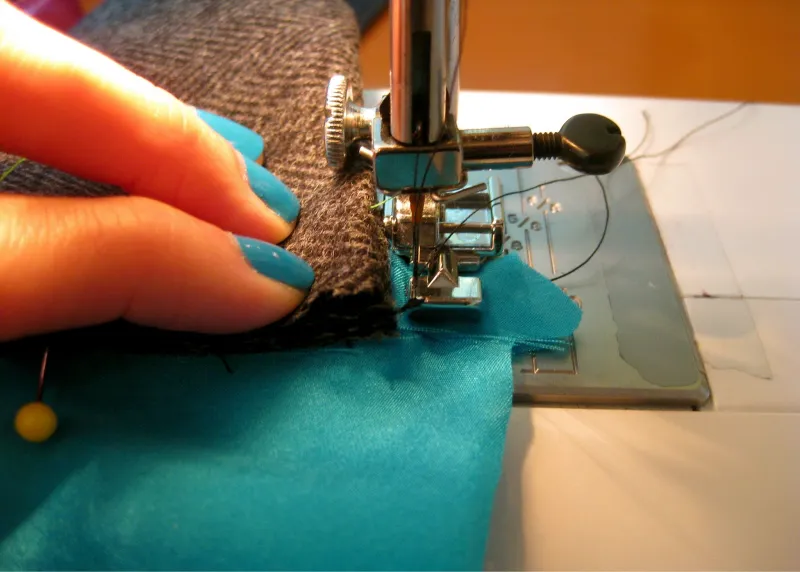
Photo: hands sewing hidden pocket inside coat lining close up, via blogger.googleusercontent.com
There's a coat hanging in a closet in Portland, Oregon, that looks like any other well-made wool overcoat. It isn't. Sewn into the inside of its lining, folded small and basted flat, is a handwritten letter from the owner's late mother — the kind of letter you find in a shoebox after someone's gone, the kind that rearranges you.
The owner wears it to work. To the grocery store. To her kid's soccer games in the rain. Nobody has ever seen the letter. That's the entire point.
The Trend That Doesn't Want to Be Seen
Ask custom makers around the country what clients are requesting lately, and a pattern emerges — a hidden one. A woodworker in Asheville stitches fabric cut from a client's grandfather's work shirt into the chest pocket of a chore coat, facing inward. A maker in Chicago sews a small paper-backed map of a childhood neighborhood between the layers of a jacket lining. A bridal seamstress in Texas reports that more than half her clients now ask for something secret: a date, a phrase, a scrap of a loved one's clothing, tucked where only the wearer will find it.
This isn't monogramming. Monogramming announces. This is the opposite — personalization engineered for an audience of one.
"People will spend real money on a detail that literally cannot be photographed," one maker told me, laughing. "And then they'll get emotional talking about it. You can't sell that on Instagram, and that's exactly why they want it."
Why Hide the Best Part?
We live in the most documented era in human history. Every outfit is a potential post, every meaningful object a content opportunity. Against that backdrop, choosing to embed your most meaningful memento somewhere invisible starts to look less like sentimentality and more like a statement.
It's intimacy without performance. A private ritual you carry on your body. The letter in the coat doesn't need likes; it needs to be there on the hard days, close to the skin.
There's something older happening here, too. Soldiers have sewed photos into uniform linings for centuries. Immigrants stitched coins and fabric from home into the seams of their only good coat. Hidden stitching is one of the oldest forms of wearable memory — we're just rediscovering it after a few decades of logos shouting from every chest pocket.
What People Are Hiding (and Why)
The catalog of secret details makers described to us reads like a museum of American feeling:
- Fabric from a childhood home — a cut of curtains, a pillowcase, sometimes literally a square of the wallpaper reproduced in print
- A parent's flannel or work shirt, reduced to a palm-sized patch inside a jacket the child now wears to their own job
- Handwritten notes, sometimes in the deceased's actual handwriting, reproduced on fabric and stitched flat
- Hospital bracelet ribbons, baby socks, a strip of a wedding dress hem — the physical residue of the days that made us
One client described the sensation perfectly: "It's like carrying a photograph you never have to show anyone. Some mornings I press my hand flat against my chest and I know it's there. That's enough."
The Maker's Perspective: Stitching Someone's Grief
For custom makers, hidden details are some of the most emotionally loaded work they do. You're not just sewing; you're handling someone's grief, their love, their oldest memories — and doing it well matters enormously.
The best makers treat it that way. They ask questions. They confirm placement. They understand that a crooked stitch over a mother's handwriting isn't a quality issue — it's a heartbreak issue. The good ones slow down for these commissions.
And here's the thing they all mention: clients who request hidden details are almost never their most demanding customers. They're the most trusting. When you can't see the work, you have to believe in the person doing it.
Wearing Your Story, Even When It's Hidden
At Stained By Me, we talk a lot about clothes that carry your story — and usually we mean the visible kind: the mended knee, the faded dye, the patch that announces itself. But the secret stitch might be the purest version of the idea.
A visible repair says, I've lived in this. A hidden one says, This knows me. No one else has to understand it. No one else has to see it at all.
In a culture that treats visibility as value, there's something quietly defiant about a memento sewn where the world can't reach it. The coat looks ordinary. The person inside it is carrying a letter, a map, a scrap of someone they loved.
That's not fashion. That's armor, and tenderness, and privacy — all stitched by hand, all yours alone.